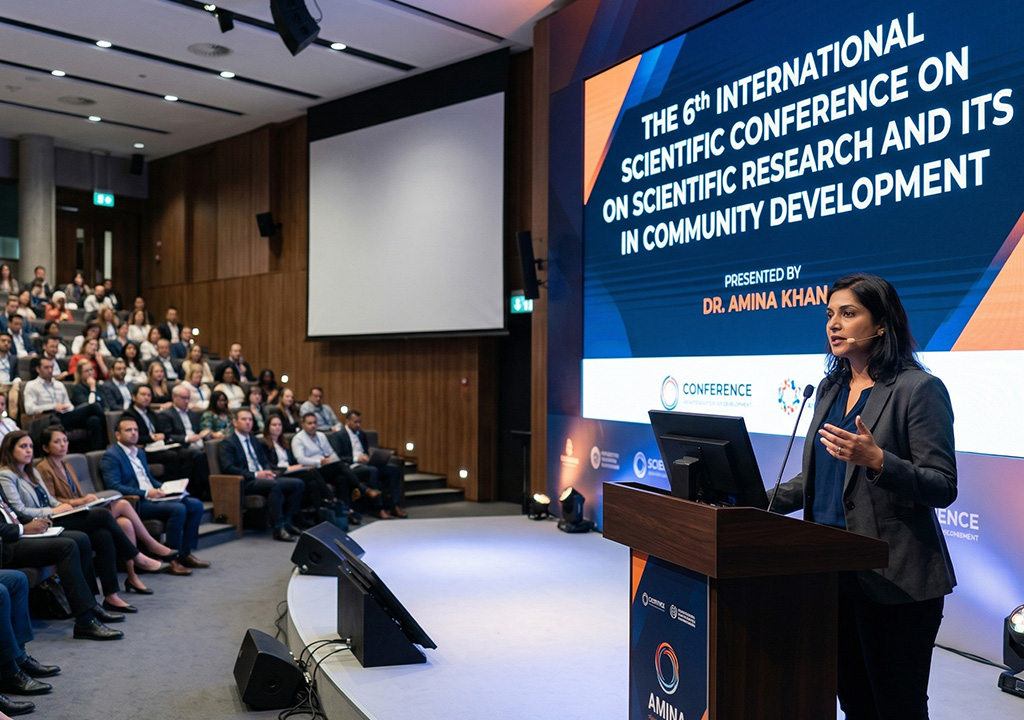
The 6th International Scientific Conference on Scientific Research and Its Role in Community Development
About the Conference
The necessity for scientific research and empirical studies is becoming increasingly urgent. Science is engaged in a continuous endeavor to acquire specialized knowledge across various disciplines, ensuring the prosperity and well-being of nations. Indeed, the advancement of societies is intrinsically linked to their scientific output and the research-driven achievements that address contemporary challenges and enhance the quality of life.
Scientific research serves as the cornerstone for national excellence, securing optimal conditions for growth and sustainability. Its fundamental role is to generate knowledge that fosters improved societal conditions. Consequently, the application of scientific methodologies has become indispensable across all fields of knowledge. Mastery of research methods and adherence to the principles of scientific inquiry-from defining research problems and operational descriptions to selecting appropriate methodologies for data collection and analysis-are crucial in both theoretical and applied sciences.
To address these critical needs, the International Scientific Conference on Scientific Research and Its Role in Community Development has been established. The conference serves as a global platform to present and discuss a diverse range of studies. Through its academic sessions and specialized workshops, it provides researchers, faculty members from public and private universities, and research enthusiasts worldwide the opportunity to contribute to the progress and quality of scientific inquiry.
Conference Objectives
- Examine the current state of scientific research.
- Propose solutions to various issues and challenges within the field.
- Discuss modern trends in scientific research and their role in the advancement of nations.
- Anticipate the future of scientific research and the potential challenges it may face.
- Explore international and regional experiences that contribute to the development of global scientific research.
Conference Themes
Theme 1: Scientific Research and Its Relation to Various Disciplines
- Scientific research in religious studies.
- Scientific research in linguistic studies.
- Scientific research in educational and social sciences.
- Scientific research in financial and administrative sciences.
- Scientific research in political and economic sciences.
- Scientific research in applied sciences.
- Scientific research in medical and health sciences.
- Scientific research and urban management.
- Scientific research and environmental issues.
- Scientific research in legal studies.
- Scientific research and public relations.
- Scientific research in psychological sciences.
- Scientific research in biological sciences.
- Scientific research in technological sciences.
Theme 2: Scientific Research and Its Developmental Role
- The role of scientific research in comprehensive development.
- Scientific research and sustainable growth.
- Scientific research supporting Sustainable Development Goals (SDGs).
- The role of media in promoting scientific research.
- Scientific research in enhancing human development indicators.
- The role of data science in advancing scientific research.
- The contribution of higher education institutions to research development.
- The impact of media on research for societal progress.
- Encouraging and supporting scientific research by community institutions.
- University scientific inventions and their role in societal development.
- Scientific research in local and regional development.
- Scientific research in achieving development goals.
- Scientific research and its role in social responsibility.
Theme 3: Scientific Research and the Digital World
- Technologies for scientific research and digital publication.
- Software and tools contributing to the development of scientific research.
- Digital platforms and their role in advancing scientific research.
- Research skills in the digital environment.
- Digital transformation in scientific research.
- Applications of digital transformation in scientific research.
- Digital culture in scientific research.
- Building electronic platforms for scientific research.
- Enhancing researchers' digital information awareness.
- The use of artificial intelligence in scientific research.
- The impact of digital technology on the quality of scientific research.
- Challenges faced by research institutions in the digital age.
- Artificial intelligence and its role in advancing scientific research.
- Digital repositories in supporting scientific research.
- Barriers to digital scientific research.
- Online education and its role in scientific research.
- Impact factors in electronic journals and their contribution to scientific research.
- Electronic journals: current realities and future aspirations.
Theme 4: Scientific Research: Methods and Issues
- Modern trends in scientific research and their societal contributions.
- Contemporary methodologies in scientific research.
- Challenges and obstacles in scientific research.
- Emerging challenges in scientific research.
- Research design methods and their role in advancing scientific research.
- Ethics in scientific research.
- Statistical analyses in scientific research.
- Surveys and field studies in scientific research.
- Leading international models in scientific research.
- Quality standards in scientific research.
- Scientific research: current realities and future aspirations.
- Building and developing research capacities among researchers.
- Current realities of scientific research funding.
- Digital resources for scientific research.
- Managing information overload in scientific research.
- Success stories in various research fields.
- Challenges in leveraging scientific research for societal advancement.
- Forecasting the future of scientific research and the requirements for progress.
- Scientific research and its role in economic development.
- The impact of scientific research on knowledge innovation.
- Scientific research and its influence on education quality.
- Investing in human capital as a contemporary approach to enhancing research indicators.
- Investing in scientific research as a cornerstone of scientific innovation.
- The societal significance of scientific research.
- The responsibility of scientific researchers.
- Exemplary models in scientific research.
- Scientific research and innovation.
- Diagnosing the current state of scientific research.
- Bridging the gap between scientific research and the private sector.
- Advancing and flourishing communities through modern and advanced scientific methods.
- Insights, ideas, and perspectives for developing research methods and programs under global standards.
- State and institutional support for scientific research.
- University professors' competencies in advancing scientific research.
- Mechanisms for enhancing higher education and scientific research.
- Scientific research and academic publishing as a resource for further studies.
- Research problems: traditional views and future aspirations.
Registration Categories & Fees
| Registration Category | Fee |
|---|---|
| Presenter | USD 220 |
| Poster Presenter | USD 150 |
| Attendee | Free |
| Exhibitor | USD 75 |
🌟 Selected papers will be published in Scopus-indexed journals.
* Includes official certification and journal publication where applicable.
Abstract Submission Guidelines
- Abstracts must be submitted in Microsoft Word format and carefully proofread.
- Submissions must be original and not previously published.
- Abstract length: 150-250 words, submitted for Scientific Committee evaluation.
- Formatting: Times New Roman, size 14, line spacing 1.15.
- Required details: Paper Title | Author Name | Affiliation | Email | Conference Title & Dates.
- For English abstracts, a full Arabic abstract must also be provided.
Key Dates
📅 Conference Dates (Virtual): 9–11 June 2026
⏳ Abstract Submission Deadline: 02 June 2026
📝 Full Paper Submission: Within 30 days after the conference.
Publication Outlets
Accepted papers will be published in one of the following journals:
- International Innovations Journal of Applied Science
- Gateway Journal for Modern Studies and Research
- The Innovations Journal of Humanities and Social Studies